What Is Fiberglass? Types, Uses, and Key Properties Explained
Fiberglass, formally known as Glass-Reinforced Plastic (GRP) or Fiber-Reinforced Plastic (FRP), is one of the most versatile and durable composite materials used in modern manufacturing. By combining thin strands of glass fibers with a binding resin matrix, fiberglass delivers exceptional strength without adding significant weight.
Whether used as thermal insulation in homes, hull construction in boats, or lightweight custom interior decor, fiberglass plays a foundational role in structural engineering and architectural design.
How Is Fiberglass Made?
The manufacturing process of fiberglass consists of two primary stages: glass production and composite formation.
- Silica Melting: Raw materials—primarily silica sand, limestone, and soda ash—are melted in a furnace at temperatures exceeding 1,500°C (2,700°F).
- Fiber Extrusion: The molten glass is forced through micro-bushing holes with tiny orifices, producing continuous filaments measured in micrometers.
- Sizing and Weaving: A chemical coating (sizing) is applied to protect the glass filaments before they are gathered into strands, chopped, or woven into fabric mats.
- Resin Bonding: The glass fibers are laid into a mold and saturated with a polymer binder (polyester, epoxy, or vinyl ester resin) that cures to form a rigid structural composite.
Key Types of Fiberglass Materials
Different applications require different formulations of glass fibers. The primary grades include:
- E-Glass (Electrical Glass): The standard commercial grade, offering excellent electrical insulation and mechanical strength at a cost-effective price.
- S-Glass (Structural Glass): Offers higher tensile strength and temperature resistance, making it ideal for aerospace and military applications.
- C-Glass (Chemical Glass): Highly resistant to chemical corrosion, commonly used in storage tanks, pipes, and acid-exposure environments.
- AR-Glass (Alkali Resistant): Formulated with zirconium oxide to resist alkaline attack, frequently used in concrete reinforcement (GRC).
Core Physical Properties and Advantages
| Property | Benefit | Industrial Impact |
| High Strength-to-Weight Ratio | Stronger than many metals per unit weight | Ideal for aerospace, automotive, and portable structures |
| Corrosion & Weather Resistance | Does not rust, rot, or degrade in moisture | Preferred material for marine, outdoor decor, and piping |
| Thermal & Electrical Insulation | Low thermal conductivity, non-conductive | Used widely in building insulation and electrical housings |
| Dimensional Stability | Zero shrinkage or thermal warping under heat | Ensures precision molding for custom shapes and panels |
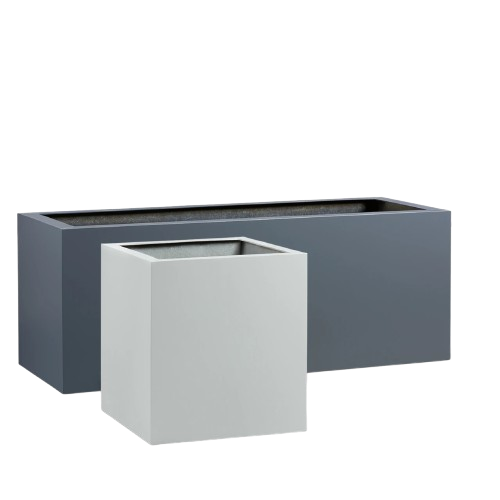
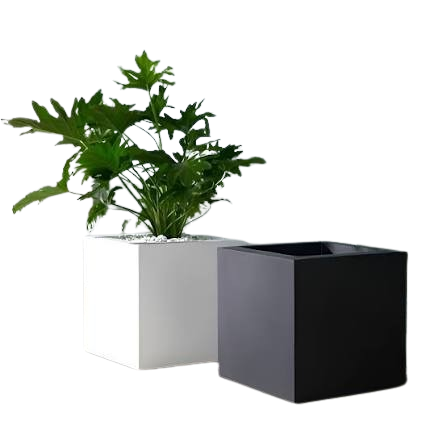
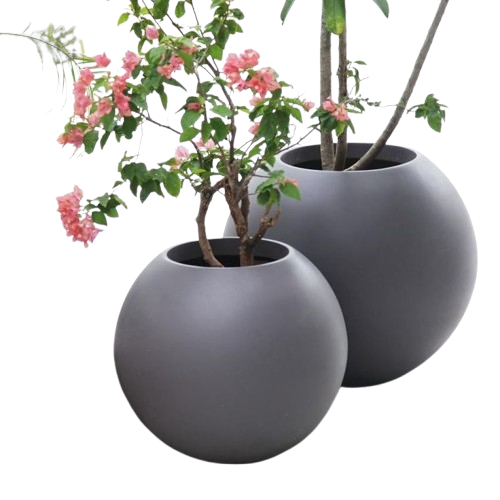
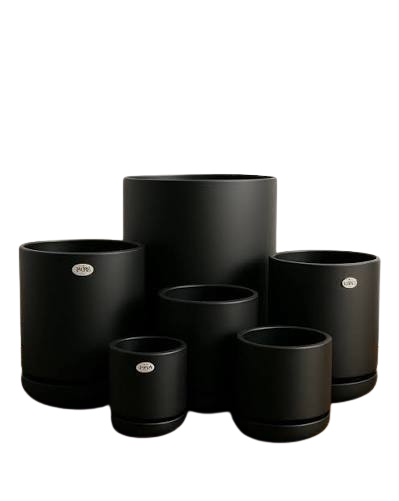
| Design Flexibility | Moldable into complex geometric forms | Highly popular for custom architectural features and planters |